

How Skin and Skincare Works

The skin lipids that create the lipid matrix and act like the mortar for the bricks are extremely unique. They contain very diverse fatty acids not found elsewhere in the body. Fatty acids are molecular building blocks of the lipids. They can vary by their length and by their type of chemical bond referred to as saturation.
Saturated means the molecule has no bonds between atoms that create bends and kinks so they lay more linearly. They pack more tightly together, creating a denser, more ordered barrier.
Unsaturated means the fatty acid has atom bonds that create bends or “kinks” that increase fluidity and flexibility. Since they can’t lay flat against each other they are moveable. Polyunsaturated means it has even more kinks for more fluidity.
To protect and replenish, the skin barrier needs diverse fatty acids that are:
-

Long and Saturated
(ie. Stearic acid found in our shea nut oil that creates a richer, more protective skin feel)
-

Long and Unsaturated
(ie. Oleic acid found in our avocado oil and sweet almond oil that with its kinky bonds increases softness, flexibility, and skin permeability)
-

Long and Polyunsaturated
(Linoleic acid found in our grapeseed oil with even more kinky bonds supports barrier repair, reduces inflammation, and is especially beneficial for acne-prone or compromised skin)
-

Short and Saturated
(Coconut derived Caprylic acid found in our serum creates a lightweight, silky texture without feeling heavy)


The Risks of Synthetic Approaches to Skin Care
Many synthetic ingredients found in skincare (DMSO, pyrrolidones, alcohols, glycols, surfactants, azones) penetrate by disrupting the integrity of the skin barrier, which often causes irritation, dryness, inflammation, and sensitivity. (SOURCE)
Synthetic products often just sit on top of the skin barrier and evaporate, taking the skin’s existing moisture with the evaporation and leaving the skin even dryer and unnourished. (SOURCE)
Our oils are made with no synthetic products, even in the scent which is crafted with natural essential oils and supportive natural plant derivatives.
By contrast, natural lipid-based oils appear native to the skin and can interact directly with the skin’s own lipid matrix, helping reorganize or fluidize the stratum corneum in ways that allow nutrients and hydration to blend into the skin barrier and travel past it to sustained delivery of active compounds all while reinforcing the skin barrier itself. (SOURCE)
The diverse organic oils contained in our PhytoLipid Complex™ together provide a skin-compatible lipid profile that closely mirrors the composition and behavior of the skin’s natural barrier system, helping support its structure, function, flexibility, hydration, and protective resilience.
Here is how our PhytoLipid Complex™ works scientifically
-

Oleic acid and linoleic acid found in avocado, almond, and grapeseed oils — help increase flexibility and fluidity within the tightly packed lipid layers of the skin barrier.
-

Jojoba oil’s wax esters closely resemble human sebum, allowing it to integrate exceptionally well with the skin surface and help carry lipid-soluble actives across the outer barrier layers.
-

Linoleic acid-rich oils like grapeseed oil help support the organization and repair of the skin barrier itself, improving the skin’s ability to retain moisture over time.
-

Shea butter’s saturated fatty acids, especially stearic acid, create a more protective and cushioning layer that slows water evaporation and reinforces barrier resilience.
-

Phytosterols and lipid-soluble antioxidants in avocado and shea help support membrane stability, soothe inflammation, and protect lipids within the barrier from oxidative stress.


Why Oils instead of Lotions?
What Nutrients Does Our Skincare Deliver?
Our oils are rich with vitamins, phytonutrients and bioactive lipids, hence we call our blend the PhytoLipid ComplexTM.
Vitamins are essential nutrients the human body needs in small amounts to survive and function properly. Your body either cannot make them at all or cannot make enough of them, so they must come from food or other external sources
Phytonutrients are bioactive compounds made by plants to protect themselves from UV radiation, oxidation, insects, pathogens, and environmental stress.
Bioactive lipids are fats or fat-like molecules that do more than simply provide moisture or structure — they actively influence biological processes within the skin and body.


Why Are Our Oils At the Highest Quality?
ORGANIC & COLD PRESSED FOR HIGHEST QUALITY
All our plant oils are organic and cold-pressed.
Cold-pressed plant oils have better nutritive properties than those that have undergone the refining process (SOURCE). Cold-pressed, minimally refined oils retain more phytonutrients, antioxidants, polyphenols, sterols, and bioactive compounds than heavily processed oils.
Studies show that cold pressed oils retain significantly higher levels of:
- Tocopherols— lipid protection, antioxidant defense
- Carotenoids— UV protection, radiance support
- Phytosterols— barrier repair, inflammation reduction
- Antioxidant compounds — free radical neutralization, anti-aging (SOURCE)
Additionally, organic cultivation reduces pesticide residues and oxidative degradation. Research shows that organically grown plant products often contain higher antioxidant activity, higher polyphenol levels, and lower pesticide residues.
How Do These Oils Reduce the Effects of Aging?
Why Don't These Oils Clog Pores & Work for Oily, Dry & Combination Skin?
The oils we use are non-comedogenic, meaning they do not block pores. This helps prevent acne and breakouts. SOURCE
In simple terms: some oils sit heavily on the skin, while others integrate more gracefully with the skin barrier and are less likely to trap debris or thicken inside pores. That is why choosing the right oils matters. Our formulation favors elegant, skin-compatible oils that support softness, barrier health, and glow—without the greasy heaviness commonly associated with pore clogging. SOURCE
Many synthetic permeation enhancers found in skincare (DMSO, pyrrolidones, alcohols, glycols, surfactants, azones) penetrate by disrupting the integrity of the stratum corneum barrier, but often cause irritation, dryness, inflammation, and sensitivity. (SOURCE)


Additionally, here are ingredients we avoid to ensure all skin types will benefit from our products:
- Hydroquinone: While it can lighten dark spots, prolonged use can lead to ochronosis, a bluish-black discoloration of the skin.
- Benzoyl Peroxide: Effective for acne, but it can be drying and irritating, potentially leading to post-inflammatory hyperpigmentation.
- Retinoids: While beneficial for anti-aging and acne, they can cause irritation and sensitivity, which may lead to post-inflammatory hyperpigmentation.
- Excessively Harsh Exfoliants: Physical scrubs or high concentrations of AHAs/BHAs can irritate skin and exacerbate hyperpigmentation.
Why Apply Oil to Damp Skin Rather than Dry Skin?
Applying oil to damp skin is usually more effective than applying it to very dry skin because oils mainly act as emollients and occlusives: they soften skin and help reduce transepidermal water loss (TEWL), but they do not add water themselves. When skin is slightly damp after cleansing, there is surface water available for the oil layer to help retain, which can improve softness, comfort, and hydration compared with applying oil onto already dry skin. Damp skin can also improve spreadability, so less oil is needed and the finish often feels lighter rather than greasy. Oils rich in skin-compatible lipids (such as jojoba, almond, grapeseed) may further support barrier function by filling gaps between surface skin cells while helping retain moisture. (SOURCE)

Why Combine Fruit, Nuts, and Seed Oils?
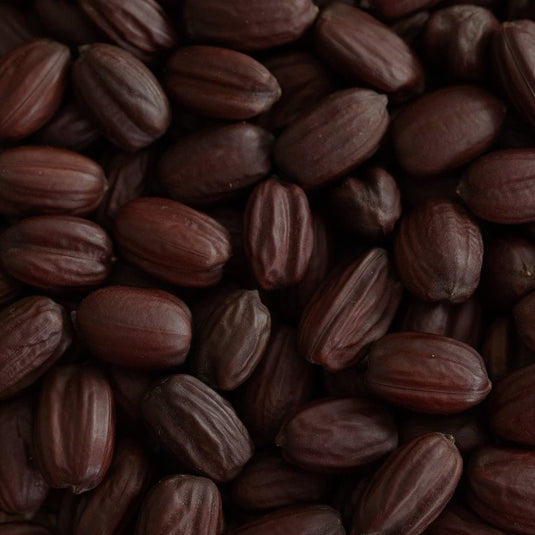
1. Diverse Nutrient Profile
1. Diverse Nutrient Profile
- Seed Oils: Often rich in essential fatty acids (like omega-3 and omega-6), antioxidants, and vitamins. Examples include grapeseed and jojoba oil.
- Nut Oils: Usually high in vitamins (such as vitamin E), minerals, and fatty acids. Examples include sweet almond oil and shea nut.
- Fruit Oils: Typically contain vitamins, antioxidants, and phytosterols. This includes avocado oil.
Combining these oils can provide a broader range of nutrients and antioxidants, which can be beneficial for overall skin health.(SOURCE)
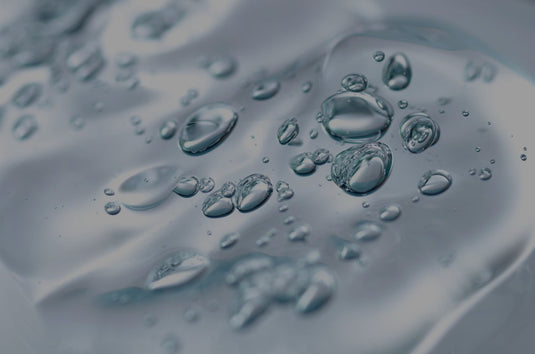
2. Enhanced Moisturization
2. Enhanced Moisturization
Different oils have different moisturizing properties. For instance, nut oils often have a lighter texture and absorb quickly, while seed oils might provide deeper hydration. Fruit oils, like avocado oil, offer rich, emollient properties. An emollient is a type of ingredient used in skincare products to soften, soothe, and moisturize the skin. Emollients work by filling in the gaps between skin cells, creating a smooth and supple texture. They are particularly effective in treating dry, rough, or flaky skin. Together, nut, seed and fruit oils create full spectrum moisturizing. (SOURCE)
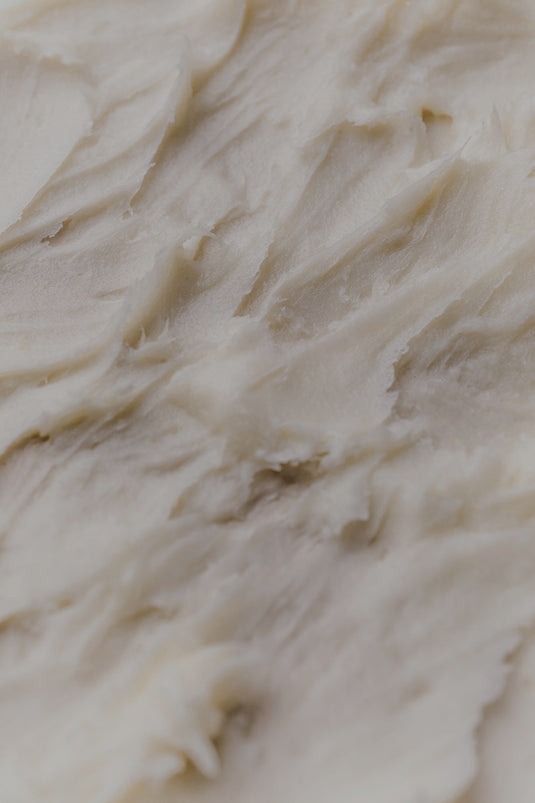
3. Balanced Skin Benefits
3. Balanced Skin Benefits
- Seed Oils: Often known for their anti-inflammatory and balancing effects, which can help calm irritated skin and regulate oil production.
- Nut Oils: Can help with nourishment and support skin barrier function.
- Fruit Oils: Often rich in vitamins and antioxidants that can help with skin regeneration and protection from environmental stressors. (SOURCE)

4. Improved Absorption and Efficacy
4. Improved Absorption and Efficacy
Different oils have different molecular weights and absorption rates. Combining them can help ensure that your skin receives a range of benefits and that the oils penetrate various layers of the skin more effectively. (SOURCE)
Why the Combination of Jojoba and Sweet Almond Oils in all our Formulations?
Combining jojoba oil and almond oil as the carrier oils in all our products is very purposeful as they are complimentary in many ways that benefit all layers of the skin.
A study on Almond oil and Jojoba oil found that these oils were able to penetrate deeply into the stratum corneum, the skin’s outermost protective layer, reaching approximately 70–90% of its thickness. This does not mean they entered deeper living tissue, but rather that they moved through much of the surface barrier where moisture balance and skin texture are largely regulated. Their presence within this layer can help soften the skin and improve overall hydration retention.(SOURCE)
The study also suggested these oils supported lateral and lamellar packing of intercellular lipids—the natural fats that sit between skin cells and act as the “mortar” of the skin barrier. Lateral packing refers to lipids aligning side by side, while lamellar packing refers to their organization into layered sheet-like structures. When these lipids are more orderly, the skin barrier can function more effectively, helping reduce water loss, strengthen resilience, and create a smoother, healthier appearance.


Additionally, these two oils specifically have complimentary moisturizing mechanisms. They work together to nourish and balance the skin just as it needs. Sweet almond oil is rich in fatty acids, which help to provide vitamins and hydrate the skin, while jojoba oil closely resembles the skin’s natural sebum, helping to balance oil production.
They also combine to benefit skin texture, creating firmness and elasticity without compromising softness. Sweet almond oil helps improve skin elasticity and reduces the appearance of fine lines, while jojoba oil helps to keep the skin soft and supple.
Jojoba oil and sweet almond oil together provide a broad spectrum of antioxidants that work synergistically to protect and nourish the skin. They provide different forms of the powerful antioxidant Vitamin E, magnifying the combined effect. Together they additionally contain Vitamin A, squalene, phytosterols, and polyphenols that enhance the skin’s ability to combat oxidative stress, reduce inflammation, provide hydration, improve the skin barrier function, and promote skin cell regeneration with a combined anti-aging effect.
Why use Rich Oils Like Avocado Oil?
-

1. Nourishing and Repairing at the Deeper Layers:
Nutrient Delivery: Although they take 30-60 min to fully sink into the skin, slow-absorbing oils like avocado oil are rich in nutrients such as vitamins A, D, E, and monounsaturated fatty acids that penetrate and nourish the difficult to reach deeper skin layers.
-

2. Extended Moisture Retention:
Long-Lasting Hydration: Slow-absorbing oils not only nourish deeper skin layers, they create a barrier on the skin surface that physically blocks evaporation, locking in moisture for prolonged hydration.
-

3. Improved Skin Softness and Smoothness:
Softening Effect: The occlusive nature of slow-absorbing oils helps soften and smooth the skin. This can be especially useful for rough or uneven skin textures.
-

4. Shields from Environmental Impurities:
Barrier Function: By forming a protective layer on the skin, these oils help strengthen the skin's barrier function. This protects the skin from environmental aggressors.
-

5. Anti-Inflammatory and Soothing Properties:
Calming Effect: Many slow-absorbing oils have anti-inflammatory properties that can help soothe irritated or inflamed skin. Avocado oil, for example, is known for its soothing effect on sensitive or irritated areas.
-

6. Anti-Aging Benefits:
Firmness and Elasticity: The rich nutrient profile of slow-absorbing oils supports collagen production and skin elasticity. Regular use can help reduce the appearance of fine lines and wrinkles.


Why is our Skincare Good for Sensitive Skin?
For sensitive skin, it’s important to choose gentle, soothing ingredients that minimize irritation.
- We use only non-comedogenic oils, which typically have fewer irritants or allergens, making them suitable for sensitive skin.
- We use two of the highest vibrational essential oils, jasmine and rose, which are both attributed to creating feelings of love and emotional and spiritual wellbeing in aromatherapy.
- We source our ingredients to be organic whenever possible.
- We cold press our oils, which preserves their beneficial properties
- We keep our formulas as simple as possible with proven, science back ingredients and no fillers, binders or non-therapeutic ingredients.
